In today’s fast-moving business environment, delivering products on time and maintaining a smooth flow of operations are essential for long-term success. Businesses must manage suppliers, transportation, inventory, warehousing, and customer expectations while keeping costs under control. A well-organized supply chain helps companies handle these challenges more effectively and build a stronger position in the market.
Whether a business operates in manufacturing, retail, trading, or distribution, having a reliable system to move products from suppliers to customers makes a significant difference. Companies that invest in better planning, coordination, and operational efficiency can reduce delays, improve customer satisfaction, and create opportunities for growth. Gitakshmi Enterprise understands the importance of efficient business operations and the role reliable supply chain solutions play in supporting modern industries.
Understanding the Importance of Supply Chain Operations
A supply chain involves several interconnected activities that work together to move goods, materials, and products from their original source to the final customer. It includes sourcing raw materials, managing suppliers, production planning, storage, transportation, distribution, and delivery.
Every stage depends on the successful completion of the previous one. For example, if raw materials arrive late, manufacturing schedules may be affected. If inventory is not managed properly, businesses may experience shortages or excess stock. These problems can increase costs and negatively affect customer relationships.
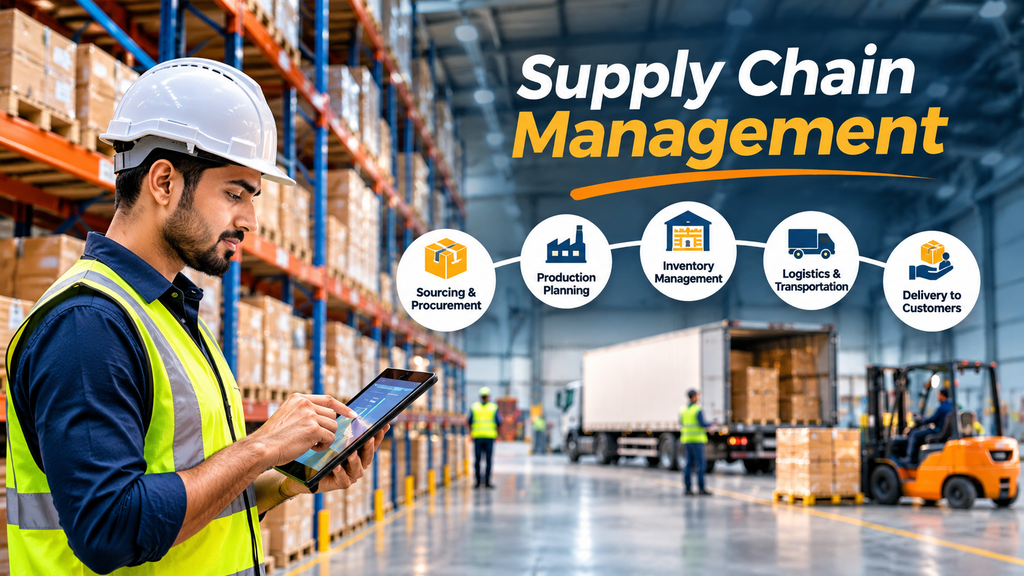
Effective supply chain management helps businesses coordinate these activities, improve visibility, and make better operational decisions. Instead of managing each department separately, companies can develop an integrated approach that connects suppliers, warehouses, transportation partners, and customers.
This coordination is particularly important for businesses operating across multiple locations or serving customers with different delivery requirements.
How Logistics and Supply Chain Management Work Together
Although logistics and supply chains are closely connected, they have different responsibilities. Logistics mainly focuses on the movement, storage, and delivery of goods. Supply chain operations cover a broader process that includes procurement, supplier relationships, production planning, inventory, logistics, and customer fulfilment.
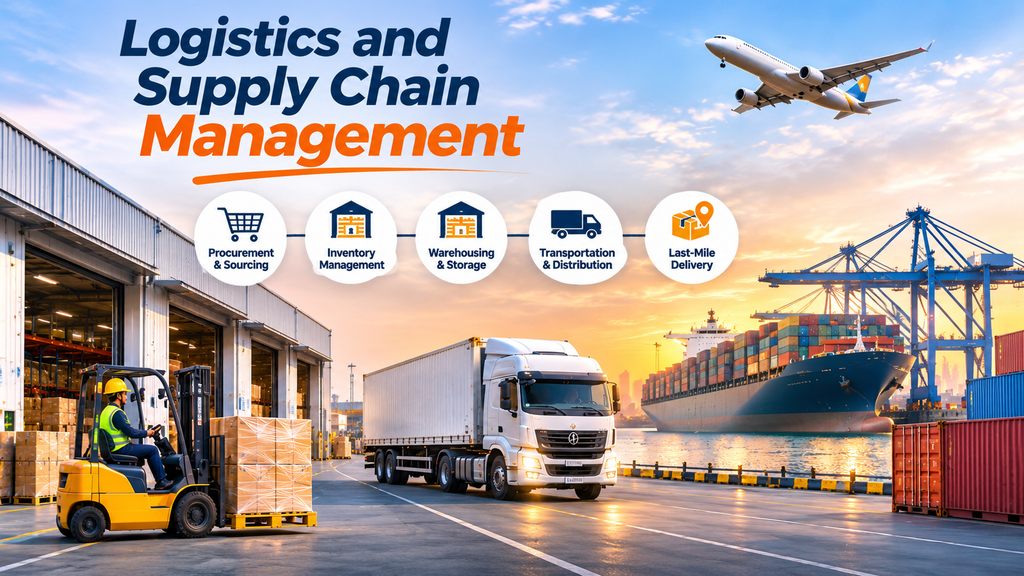
The combination of logistics and supply chain management allows businesses to manage the complete movement of products while maintaining better control over resources and operational processes.
For example, a company purchasing raw materials from multiple suppliers needs to ensure that materials are available when required. Once production is completed, finished goods must be stored, transported, and delivered to customers within the expected timeframe. Logistics plays a key role in these activities, while the broader supply chain ensures that all processes remain connected.
When both functions work efficiently, businesses can avoid unnecessary delays, improve planning accuracy, and respond more effectively to changing market demands.
The Role of Inventory Planning in Business Efficiency
Inventory management is one of the most important aspects of daily business operations. Maintaining too much inventory can increase storage expenses, create cash flow challenges, and lead to product wastage. On the other hand, insufficient inventory may result in missed orders, production delays, and dissatisfied customers.
Businesses need to find the right balance between product availability and inventory costs. Accurate demand forecasting, regular stock monitoring, and proper replenishment planning can help companies maintain suitable inventory levels.
Modern inventory planning also allows businesses to identify slow-moving products, understand purchasing trends, and make informed decisions about future stock requirements.
By maintaining better control over inventory, companies can improve warehouse efficiency, reduce unnecessary expenses, and ensure that products are available when customers need them.
Why Reliable Logistics Services Matter
Transportation and delivery are critical components of business operations. Even when products are manufactured on time and inventory is properly maintained, poor transportation planning can create delays and affect customer satisfaction.
A dependable logistics service helps businesses move goods safely, efficiently, and according to their delivery requirements. It can involve transportation planning, shipment coordination, warehousing, distribution, and tracking.
Businesses should consider several factors when selecting logistics partners, including transportation capacity, delivery timelines, communication, geographical coverage, cost efficiency, and handling capabilities.
Reliable transportation partners help companies maintain consistent operations, especially when dealing with multiple suppliers, distributors, and customers.
Choosing the right logistics partner is not only about finding the lowest price. It is also about ensuring reliability, flexibility, and the ability to support business requirements as operations expand.
Technology Is Changing Supply Chain Operations
Technology has become an important part of modern business operations. Digital tools help companies monitor inventory, track shipments, analyse demand, manage supplier information, and improve communication between departments.
Businesses can use inventory management software, transportation management systems, warehouse management tools, and data analytics to gain better visibility into their operations.
Real-time tracking allows companies to identify shipment delays and take action before problems affect customers. Data analysis can also help businesses understand demand patterns, optimise delivery routes, and reduce operational costs.
Automation is another important development. Automated warehouse processes, digital documentation, and integrated business systems can reduce manual errors and improve productivity.
However, technology alone cannot solve every operational challenge. Businesses must also establish clear processes, train employees, and regularly evaluate their performance to achieve meaningful improvements.
Common Supply Chain Challenges Businesses Face
Many businesses experience challenges that affect operational efficiency and profitability. Some of the most common problems include:
- Delayed deliveries and transportation disruptions
- Poor inventory visibility
- Rising transportation and warehousing costs
- Supplier dependency and communication gaps
- Unexpected changes in customer demand
- Inefficient warehouse processes
- Lack of accurate planning and forecasting
- Difficulty managing multiple vendors and locations
These challenges can become more serious when businesses grow or expand into new markets. Without proper planning, small operational problems may lead to larger disruptions.
Effective logistics management helps businesses address these issues through better coordination, route planning, resource allocation, shipment monitoring, and process improvement.
Companies that regularly review their operations are better positioned to identify risks, improve efficiency, and maintain consistent service quality.
Strategies to Build a More Efficient Supply Chain
Businesses do not always need major investments to improve their supply chain operations. In many cases, practical changes in planning and coordination can deliver significant results.
First, companies should establish clear communication with suppliers and logistics partners. Regular updates regarding stock availability, delivery schedules, and potential disruptions help prevent unexpected problems.
Second, businesses should review their inventory regularly. Identifying fast-moving and slow-moving products can improve purchasing decisions and reduce unnecessary storage costs.
Third, transportation planning should be based on delivery requirements, shipment volumes, and route efficiency. Combining shipments where possible and selecting suitable transportation methods can help control costs.
Finally, businesses should monitor key performance indicators such as order fulfilment rates, delivery times, inventory turnover, transportation costs, and supplier performance. These measurements provide valuable insights into areas that require improvement.
A consistent approach to planning and performance evaluation helps businesses create more reliable and cost-effective operations.
Building Long-Term Business Growth Through Better Operations
A strong supply chain is more than a system for moving products. It is an important part of business growth, customer satisfaction, and competitive advantage.
Businesses with efficient operations can respond more quickly to customer requirements, manage costs more effectively, and adapt to market changes. Better coordination between suppliers, warehouses, transportation partners, and internal teams also creates a more predictable business environment.
As companies expand, their operational requirements may become more complex. Investing in reliable partners, practical technology, accurate planning, and continuous improvement can help businesses maintain efficiency without compromising service quality.
Conclusion
Efficient supply chain operations help businesses maintain product availability, control costs, improve delivery performance, and build stronger customer relationships. From supplier coordination and inventory planning to transportation and distribution, every activity contributes to the overall performance of a business.
Businesses that focus on transparency, planning, technology, and reliable partnerships can develop operations that are better prepared for future challenges.
At Gitakshmi Enterprise, we believe that efficient business operations begin with proper coordination, dependable processes, and a clear understanding of industry requirements. Whether your business is improving existing operations or planning for future expansion, building a reliable supply chain can help create long-term value.
Looking to improve your business operations and build a more efficient supply chain? Connect with Gitakshmi Enterprise today to explore practical solutions that support your business goals and help you move forward with confidence.