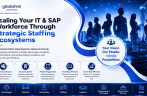

Modernizing Enterprise Capacity: How Forward-Thinking Technology Leaders Eliminate Delivery Gaps, Navigate the S/4HANA Transition, and Deploy Elastic Engineering Talent at Scale
The Modern IT & SAP Delivery Squeeze
The enterprise technology landscape has shifted from predictable, multi-year project lifecycles to continuous, high-velocity transformation. Today, enterprise leaders face a dual mandate: accelerate digital roadmaps to capture competitive advantage while simultaneously reigning in operational expenditure and mitigating technical debt.
At the epicenter of this challenge lies a critical friction point: human capital.
Whether executing a mission-critical SAP S/4HANA migration, refactoring monolithic architectures into cloud-native microservices, or orchestrating multi-tenant enterprise integrations, technology leaders consistently run into the same barrier—the specialized talent gap.
Traditional talent acquisition engines are broken. Relying solely on conventional recruitment agencies, subcontractors, transactional resume brokers, or rigid internal hiring frameworks creates severe operational vulnerabilities:
- Protracted Hiring Cycles: Averaging 60 to 90 days to onboard specialized senior talent, stalling strategic sprints.
- Prohibitive Cost Structures: Skyrocketing full-time employee (FTE) fixed overheads combined with low long-term utilization rates after peak migration phases.
- Severe Skill Mismatches: Resume keyword-matching that fails during real-world architecture execution, leading to costly project delays and system rollbacks.
To break this bottleneck, market leaders are abandoning transactional vendor relationships in favor of Strategic Staffing Ecosystems.
This comprehensive guide explores the architectural, operational, and financial frameworks required to scale your IT and SAP workforce dynamically—ensuring your enterprise retains the agility, specialized acumen, and capacity to deliver projects on time, on budget, and at institutional grade.
1. The Anatomy of Market Failure: Why Traditional Staffing Models Collapse
To understand the imperative of a strategic ecosystem, we must first diagnose why legacy staffing methodologies fail enterprise technology initiatives.

The “Body-Shopping” Dilemma
For decades, IT staffing operated on a transactional “contingency placement” or “body-shopping” model. A staffing agency received a job description, matched broad keywords using automated tools, and flooded the client’s hiring managers with dozens of unvetted CVs.
In low-complexity environments, this model was tolerable. In today’s complex enterprise environments—where a single configuration error in SAP Central Finance or an unoptimized database indexing routine can compromise millions of transactional records—it is catastrophic.
When agencies do not understand the functional intricacies of SAP BTP or the state-management challenges of distributed React/Node.js microservices, the hiring manager becomes the de facto screening mechanism, wasting hundreds of engineering hours on dead-end interviews.
The Retention and Continuity Crisis
Contractors sourced through fragmented vendor pools lack systemic alignment with the enterprise’s broader objectives. They experience high churn rates, leave abruptly when higher day-rates appear, and take vital architectural context and business logic with them. Without structured knowledge transfer mechanisms, enterprise teams are left managing fractured codebases and incomplete ERP customizations.
The Inflexible Overhead Trap
Building permanent internal teams for transitory technological shifts (such as a 14-month SAP S/4HANA brownfield migration) creates severe organizational bloat. Once the system goes live and enters maintenance, organizations find themselves overstaffed with high-cost specialized consultants whose primary utility has already passed.
2. What Is a “Strategic Staffing Ecosystem”?
A Strategic Staffing Ecosystem is not a vendor list; it is an integrated, programmatic partnership model designed to deliver on-demand technical capacity, niche competencies, and execution governance.
Unlike transactional vendors who react to job requisitions, a strategic partner functions as an external extension of your Engineering and Center of Excellence (CoE) leadership.
Core Tenets of a Strategic Staffing Ecosystem:
- Curated, Bench-Ready Competency Networks: Continuous pre-vetting of senior technical talent across defined technology stacks, eliminating sourcing lag.
- Domain-Specific Architectural Vetting: Rigorous, multi-tier evaluation conducted by practicing enterprise architects, ensuring candidates possess verifiable production experience.
- Flexible Engagement Architectures: Fluid transitions between individual staff augmentation, dedicated cross-functional pods, and milestone-based managed delivery.
- Institutional Knowledge Retention: Standardized documentation, onboarding frameworks, and governance protocols that prevent knowledge loss across project lifecycles.
- Unified Security & Compliance Baselines: Rigorous alignment with enterprise data privacy, IP ownership, SOC2, GDPR, and non-disclosure standards across all deployed personnel.
3. Comprehensive Service Portfolio: What a Strategic Ecosystem Delivers
A modern enterprise staffing ecosystem must cover the full spectrum of modern digital infrastructure—from core ERP operational backbones to custom cloud-native product engineering.

Module A: SAP Enterprise Solutions & S/4HANA Acceleration
The global transition to SAP S/4HANA, paired with SAP’s “Clean Core” strategy, has created an unprecedented global talent bottleneck. Organizations are competing fiercely for consultants who understand both legacy business processes and modern SAP cloud architectures.
A strategic ecosystem provides specialized consultants across the entire SAP value chain:
1. S/4HANA Migration & Transition Architects
- Greenfield, Brownfield, and Selective Data Transition (SDT): Specialists who evaluate legacy ERP ECC 6.0 codebases, design migration paths, and execute data harmonization without operational downtime.
- SAP Clean Core Specialists: Engineers skilled at moving custom modifications out of the core ERP database into the SAP Business Technology Platform (BTP), ensuring seamless future upgradeability.
2. Functional Module Excellence
- SAP FICO (Financial Accounting and Controlling): Consultants experienced in Universal Journal (ACDOCA), Central Finance architecture, multi-currency reporting, and automated reconciliation.
- SAP MM (Materials Management) & SCM: Experts in streamlined procurement workflows, inventory valuation, automated MRP runs, and vendor integration matrices.
- SAP SD (Sales and Distribution): Specialists in advanced order-to-cash (O2C) processing, dynamic pricing configurations, global trade management, and CRM integrations.
- SAP PP / QM / PM: Specialists bridging manufacturing floor IoT data with enterprise production planning and preventive maintenance schedules.
3. Technical, Integration & Cloud Extensions
- ABAP on HANA & Core Data Services (CDS): Developers capable of writing optimized SQL push-down logic, AMDP (ABAP Managed Database Procedures), and building OData services for modern SAP Fiori applications.
- SAP BTP (Business Technology Platform) Developers: Engineers configuring SAP Integration Suite, Extension Suite, and Event Mesh to build microservices connecting SAP with third-party software.
- SAP SuccessFactors & Concur Integrators: Functional consultants orchestrating frictionless data exchange between HR, expense management, and enterprise financial backbones.
Module B: High-Performance Digital & Cloud Engineering
Behind every ERP core is a surrounding constellation of customer-facing web platforms, partner portals, internal microservices, and automated data pipelines. A strategic staffing ecosystem delivers elite full-stack engineering capacity to design, build, and optimize these environments.
1. Full-Stack Web Application Engineering (MERN & Beyond)
- Backend Architecture (Node.js, Express, Python, Go): Specialists in designing resilient RESTful APIs, GraphQL layers, event-driven architectures, and high-throughput real-time systems.
- Modern Frontend Platforms (React, Next.js, TypeScript): Developers crafting enterprise-grade user experiences, state management (Redux Toolkit, Zustand), responsive component libraries, and performant web applications.
- Enterprise Content & Portal Systems: Custom CMS and headless WordPress architectures configured with custom PHP logic, optimized database queries, secure REST endpoints, and advanced page-speed optimizations.
2. Cloud Infrastructure, DevOps & Reliability Engineering
- Cloud Platforms (AWS, Microsoft Azure, Google Cloud): Certified cloud architects specializing in VPC topologies, serverless infrastructure, and auto-scaling container configurations.
- CI/CD & Process Automation: Engineers designing deployment pipelines using GitHub Actions, GitLab CI, Jenkins, and automated testing suites.
- Enterprise Server Administration & Orchestration: Production deployment experts managing Windows RDP/IIS environments, reverse proxy configurations, process managers (PM2), and Linux Docker/Kubernetes clusters.
3. Data Engineering & Systems Integration
- Multi-Tenant SSO & Security: Implementation of unified Single Sign-On (SSO) systems utilizing OAuth2, SAML, and JWT token exchanges across ERPs, CRMs, HRMS, and proprietary portals.
- Database Optimization: High-performance database administrators and developers specializing in MongoDB schema design, PostgreSQL indexing, query profiling, and data lake synchronization.
4. Delivery Models: Structuring Your Strategic Partnership
A key differentiator of a Strategic Staffing Ecosystem is that it does not force your enterprise into a single rigid engagement format. Instead, it offers adaptive engagement frameworks tailored to your project’s risk profile, budget, and internal management capacity.
 1. Elastic Staff Augmentation
- The Mechanism: Seamlessly insert individual senior developers, SAP functional consultants, or QA specialists directly into your existing agile sprints.
- The Value: Ideal for enterprises that maintain strong in-house project leadership and clear task backlogs but require instant domain expertise (e.g., adding an SAP BTP specialist for a 3-month integration sprint).
- Speed: Candidate shortlists delivered within 24 to 48 hours; onboarding completed in under a week.
2. Autonomous Tech Pods (Squad-as-a-Service)
- The Mechanism: Deploy fully formed, cross-functional engineering teams consisting of a Lead Architect/Product Owner, 2–4 Full-Stack/SAP Developers, and a Dedicated QA Automation Engineer.
- The Value: Eliminates the overhead of managing individual contractors. The pod functions as an autonomous unit, receiving business user stories and delivering production-ready, tested code against defined SLAs.
- Speed: Assembled and integrated within 10 to 14 business days.
3. Build-Operate-Transfer (BOT) Frameworks
- The Mechanism: For enterprises seeking to establish a dedicated, cost-effective regional Center of Excellence (CoE) without taking on upfront legal, operational, and facility risks.
- The Value: The strategic partner handles entity setup, talent acquisition, operational infrastructure, and culture-building. Once the delivery unit reaches maturity and steady-state performance (typically 12–24 months), full operational and payroll ownership transfers cleanly to your enterprise.
5. The “Build, Buy, or Borrow” Strategic Decision Matrix
Enterprise leadership must continually evaluate whether to train internal resources, recruit permanent full-time employees, or leverage an external staffing ecosystem. Using this decision matrix prevents costly organizational misalignments:
 1. When to “Build” (Upskilling Internal Teams):
- Context: The technology is foundational to your long-term, 5+ year enterprise intellectual property.
- Timeline: You have a runway of 6 to 12 months before major project milestones commence.
- Limitation: High risk of skill obsolescence if internal training fails to match market best practices.
2. When to “Buy” (Permanent FTE Hiring):
- Context: You are building long-term departmental leadership (Enterprise Architects, Directors of Engineering, IT Security Chiefs).
- Timeline: You can afford a 3-to-6-month recruitment cycle and the associated agency headhunting fees.
- Limitation: High fixed burn rate; long-term severance exposure if project budgets are revised.
3. When to “Borrow” (Strategic Staffing Ecosystem):
- Context: Accelerated delivery timelines (SAP S/4HANA go-lives, sudden platform modernization deadlines, peak seasonal workloads).
- Specialized Requirements: Highly specific technologies where permanent full-time demand does not justify long-term payroll (e.g., SAP Central Finance migration, complex JWT SSO orchestrations, cloud architecture revamps).
- Advantage: Maximum flexibility. Scale up capacity instantly during peak delivery, and spin it down without operational or legal drag when milestones are achieved.
6. The Vetting & Quality Assurance Engine: Eliminating Hiring Risk
The number one fear enterprise leaders have when engaging external staffing providers is quality failure. One subpar developer who commits poorly documented code or misconfigures an ERP data schema can cost an enterprise hundreds of thousands of dollars in technical remediation.
A strategic staffing ecosystem mitigates this risk through a rigorous, multi-gate technical vetting engine:
 – Pre-vetted, security-cleared, ready for immediate enterprise deployment (<72 hours)
Stage 1: Algorithmic & Behavioral Screening
Every candidate is screened for verified corporate experience, project tenure, and soft skills. Clear communication, cross-functional collaboration capabilities, and ownership mentalities are evaluated upfront.
Stage 2: Live Technical & Code Evaluation
Candidates participate in hands-on technical assessments that mirror real production environments—writing clean, secure code, debugging race conditions, or demonstrating state-management principles. Automated keyword stuffing cannot bypass this filter.
Stage 3: Scenario-Based Architectural Review
Conducted by seasoned, practicing Enterprise Architects. For SAP specialists, this includes live design sessions: designing CDS views, configuring complex pricing procedures, or explaining data isolation within multi-tenant cloud setups. For software engineers, it means discussing microservices failovers, memory leak debugging, and API rate-limiting strategies.
Stage 4: Continuous Performance Monitoring & SLA Backstops
Deployment is not the end of the ecosystem’s responsibility—it is the beginning. Strategic partners establish structured sprint-level performance reviews, sprint velocity tracking, and immediate, zero-friction replacement guarantees if an engineer fails to meet performance benchmarks within the first 14 days.
7. Operational & Financial ROI: The Measurable Impact
Investing in a Strategic Staffing Ecosystem is not an operational expense—it is a financial and delivery risk optimization strategy.
 Quantifying the Financial Advantage:
- Reduction in Sunk Hiring Costs: The standard internal cost-per-hire for a senior enterprise engineer or SAP consultant often exceeds $15,000 to $25,000 when accounting for job boards, internal recruiter salaries, and technical interview hours. A strategic ecosystem absorbs this acquisition cost.
- Elimination of “Bench Drag”: When a full-time employee completes a high-intensity migration, their utilization rate drops significantly during business-as-usual (BAU) maintenance. An on-demand model allows you to scale up to 10 consultants for critical go-lives and taper back down to 1–2 support resources instantly, saving millions over multi-year cycles.
- Protection of Critical Delivery Milestones: In enterprise software delivery, a 30-day delay in an ERP cutover or product launch can carry penalties, lost revenue, and competitive setbacks far exceeding the total cost of external workforce staffing.
8. Implementation Blueprint: How to Integrate a Staffing Ecosystem into Your Organization
Transitioning from transactional staffing to a strategic ecosystem requires deliberate, structured execution. Follow this four-phase operational blueprint:
Phase 1: The Skills & Capacity Audit (Weeks 1–2)
- Map your rolling 12-to-24-month IT and SAP project roadmaps.
- Categorize upcoming requirements into Core IP (roles to retain in-house), Burst Workloads (short-term scaling needs), and Niche Specializations (skills required temporarily, e.g., SAP BTP migration architects or performance tuning engineers).
- Identify current delivery bottlenecks where internal engineering teams are over-allocated.
Phase 2: Ecosystem Partner Selection & SLA Alignment (Weeks 3–4)
- Select a strategic partner with demonstrated competency in your specific technology domain (look for verifiable SAP, cloud, and modern web application delivery case studies).
- Establish operational SLAs: Time-to-Candidate Presentation (<48 hours), Time-to-Deployment (<7 days), Retention Rates (>95%), and First-Time Match Accuracy (>90%).
- Standardize master services agreements (MSAs) covering IP assignment, strict data protection, security protocols, and zero-risk trial periods.
Phase 3: Pilot Pod Deployment (Weeks 5–8)
- Initiate the partnership with a focused, high-impact pilot project (e.g., modernizing a specific customer-facing portal, integrating an SAP module, or building a high-priority microservice).
- Evaluate the partner on communication rigor, speed of integration into Jira/Git pipelines, code quality, and self-sufficiency.
- Fine-tune onboarding documentation and access provisioning workflows.
Phase 4: Full Enterprise Scaling & Continuous Optimization (Month 3+)
- Expand the ecosystem across additional delivery verticals (Enterprise Applications, Web & Mobile Engineering, DevOps, QA Automation).
- Hold quarterly workforce reviews to forecast upcoming technical skill demands against pipeline roadmaps.
- Transition high-performing ecosystem members into longer-term dedicated pods or explore BOT transitions where appropriate.
9. The Road Ahead: Future-Proofing Your Technical Workforce
The enterprise technology landscape will never move slower than it does today. With the accelerating adoption of AI-assisted development tools, intelligent ERP systems, and cloud data mesh architectures, the demand for specialized, high-caliber technical talent will continue to outpace supply.
Enterprises that cling to outdated, transactional recruiting practices will find themselves perpetually constrained—facing project delays, exhausted internal teams, and mounting technical debt.
Conversely, organizations that build a Strategic Staffing Ecosystem gain a decisive competitive advantage:
- They transform fixed talent costs into agile, variable investments.
- They acquire instant access to battle-tested specialists without sourcing lag.
- They empower internal leaders to focus on core strategic innovation, knowing that delivery capacity is available on demand.
Scaling an enterprise IT and SAP workforce is no longer about finding warm bodies to fill seats. It is about building an agile talent pipeline that delivers technical excellence whenever and wherever your business demands it.
Ready to Accelerate Your Enterprise Delivery?
Whether you are planning an SAP S/4HANA migration, augmenting your core software engineering teams, or deploying dedicated tech pods, you don’t have to navigate talent bottlenecks alone.
Partner with a Strategic Staffing Ecosystem built for modern enterprises.
- Talk to an Enterprise Workforce Strategist: Schedule a 30-minute talent capacity audit with our technical directors to identify delivery risks and forecast resource requirements.
- Access Our Pre-Vetted Talent Bench: Review vetted candidate profiles across SAP (S/4HANA, BTP, FICO, MM), MERN Stack, Cloud Architecture, and DevOps within 48 hours.
- Deploy Risk-Free: Experience the impact of context-ready senior engineering talent backed by our comprehensive two-week trial period.
[Schedule Your Workforce Capacity Consultation Today] | [Explore Our On-Demand Talent Bench]
Recent Posts