The global logistics landscape in 2026 is vastly different from what it was just a few years ago. The world has moved past the era of predictable trade routes and stable fuel prices. Today, volatility is the only constant. For businesses managed under the umbrella of Gitakshmi Enterprises, staying ahead means moving beyond traditional logistics and embracing a strategic, tech-driven approach to global trade.
Supply chain resilience is no longer a luxury—it is a survival mechanism. As a leading SAP Service Provider and logistics expert, we have observed that companies failing to adapt to global risks often face irreversible financial losses. This comprehensive guide explores the critical risks facing modern supply chains and the proven strategies to optimize costs while building a bulletproof logistics network.
1. Identifying Modern Supply Chain Risks
Before we can build a resilient system, we must understand what we are up against. In 2026, risks come from multiple directions:
- Geopolitical Instability and Trade Wars
Global trade is highly sensitive to political shifts. Changes in international relations can lead to sudden tariff hikes, port closures, or sanctions. For businesses involved in cross-border trade, these shifts can overnight turn a profitable route into a financial burden.
- Economic Volatility and Inflation
The rising cost of raw materials and fluctuating currency exchange rates directly impact freight costs. Inflation has forced many logistics providers to increase their rates, making Freight Cost Optimization a top priority for procurement managers.
- Climate Change and Regulatory Compliance
New environmental mandates in 2026 require logistics companies to reduce their carbon footprint. While “Green Logistics” is essential for the planet, the transition to sustainable fuels and electric fleets involves initial high costs and complex compliance reporting.
2. From "Just-in-Time" to "Just-in-Case"
For decades, the “Just-in-Time” (JIT) model was the gold standard, focusing on keeping inventory low to save costs. However, recent global disruptions proved that JIT is fragile. The industry is now shifting toward a “Just-in-Case” (JIC) strategy.
Building Strategic Buffers
Instead of operating on razor-thin margins, resilient businesses are maintaining “safety stocks” of critical components. This ensures that even if a shipment is delayed due to a port strike or a natural disaster, production does not stop.
Multi-Sourcing vs. Single-Sourcing
Depending on a single supplier or one geographical region is a recipe for disaster. At Gitakshmi Enterprises, we advise our clients to diversify their supplier base. If one region faces a lockdown or an energy crisis, you have a backup ready in another part of the world.
3. Tech-Driven Freight Cost Optimization
How do you reduce costs when fuel and labor prices are rising? The answer lies in technology.
AI-Powered Route Optimization
In 2026, we no longer rely on manual planning. Artificial Intelligence (AI) can analyze thousands of variables—weather, traffic, fuel prices, and port congestion—to find the most cost-effective route in real-time. This doesn’t just save time; it significantly reduces fuel consumption.
Smart Consolidation (FTL vs. LTL)
Many businesses waste money by shipping half-empty trucks. Gitakshmi Enterprises specializes in shipment consolidation. By combining smaller Less-than-Truckload (LTL) shipments into a single Full-Truckload (FTL), we help our clients achieve economies of scale, drastically lowering the cost per unit.
4. The Critical Role of Strategic Warehousing
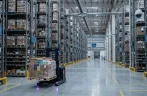
Warehousing is the heartbeat of a resilient supply chain. In 2026, a warehouse is not just a storage space; it is a strategic asset.
Decentralized Warehousing
Instead of one massive central hub, businesses are moving toward smaller, decentralized warehouses located closer to key markets. This “Last-Mile” proximity reduces transportation costs and ensures faster delivery times, which is essential for maintaining customer satisfaction in the age of instant gratification.
Automation and WMS Integration
Integrating a modern Warehouse Management System (WMS) with your ERP (like SAP S/4HANA) provides 100% visibility into your stock. When you know exactly what you have and where it is, you eliminate “dead stock” and optimize your working capital.
5. Navigating Regulatory and Customs Complexity
International trade involves a mountain of paperwork. One wrong document can lead to weeks of delays at customs.
Compliance Expertise
Working with an experienced SAP Service Provider and logistics partner like Gitakshmi ensures that your documentation is always audit-ready. From Harmonized System (HS) codes to origin certificates, we handle the complexity so you can focus on your core business.
Digital Documentation and Blockchain
The shift toward paperless trade is accelerating. Blockchain technology is being used to create immutable records of shipments, making customs clearance faster and reducing the risk of fraud.
6. Why Gitakshmi Enterprises is Your Strategic Partner
At Gitakshmi Enterprises, we don’t just move boxes; we manage risks. Our approach to logistics is built on three pillars: Visibility, Agility, and Reliability.
- Real-Time Tracking: Our clients have 24/7 access to their shipment status. No more guessing where your cargo is.
- Expert Consulting: Our SAP Consultants work with you to integrate your supply chain with your financial systems, ensuring total transparency.
- Customized Solutions: We understand that a pharmaceutical supply chain has different needs than an automotive one. We provide tailor-made strategies for every industry.
7. Conclusion: Building a Future-Proof Supply Chain
The risks of 2026 are real, but they are not insurmountable. Resilience is built through a combination of strategic planning, technological investment, and choosing the right partners. By diversifying sources, optimizing routes, and leveraging data, businesses can transform their supply chain from a vulnerability into a powerhouse of growth.
The future belongs to those who prepare today. Whether you are looking to optimize your freight costs or protect your business from global trade shocks, Gitakshmi Enterprises is here to guide you every step of the way.